IEA

traducciones_user2023

Diccionario Astropoético

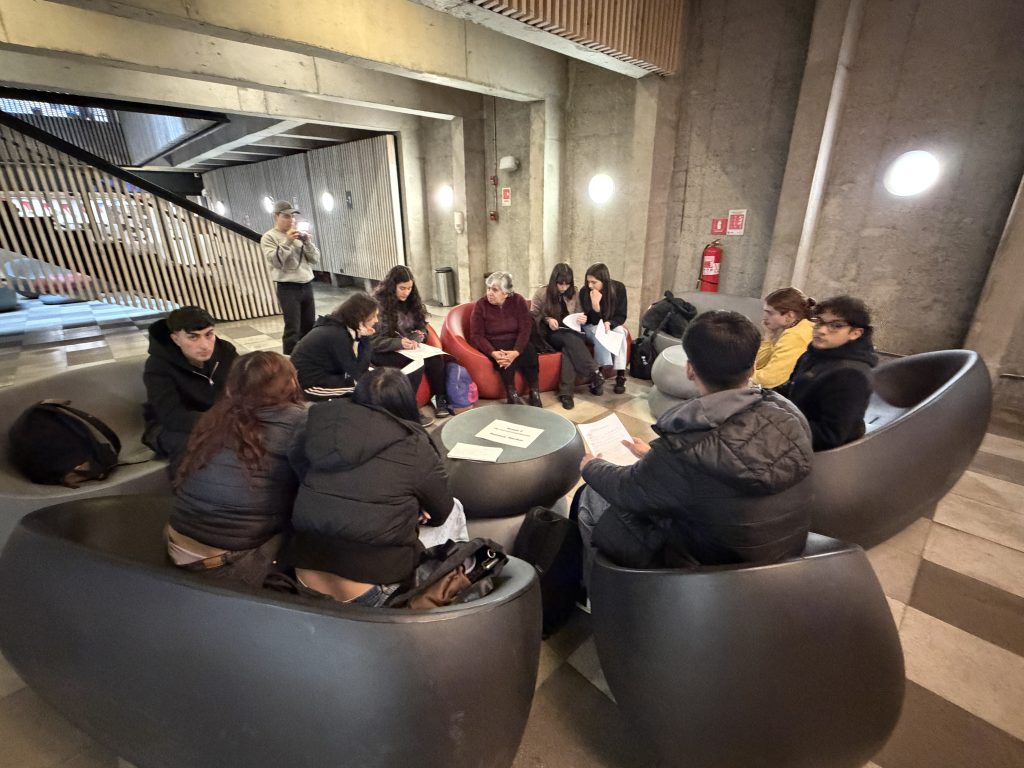
This exhibition brings together the work of students from the General Education (GE) course on Astronomy and Literature, who explored complex scientific concepts to transform and explain them through poetic language. The course assessment is materialized in this series of inclusive astronomy cards: each one presents an astronomical concept labeled in Braille, accompanied by a […]

Diccionario Astropoético Leer más »
Estudiante de doctorado YEMS UDP confirma Elias 2-24 b, el exoplaneta más joven detectado hasta ahora

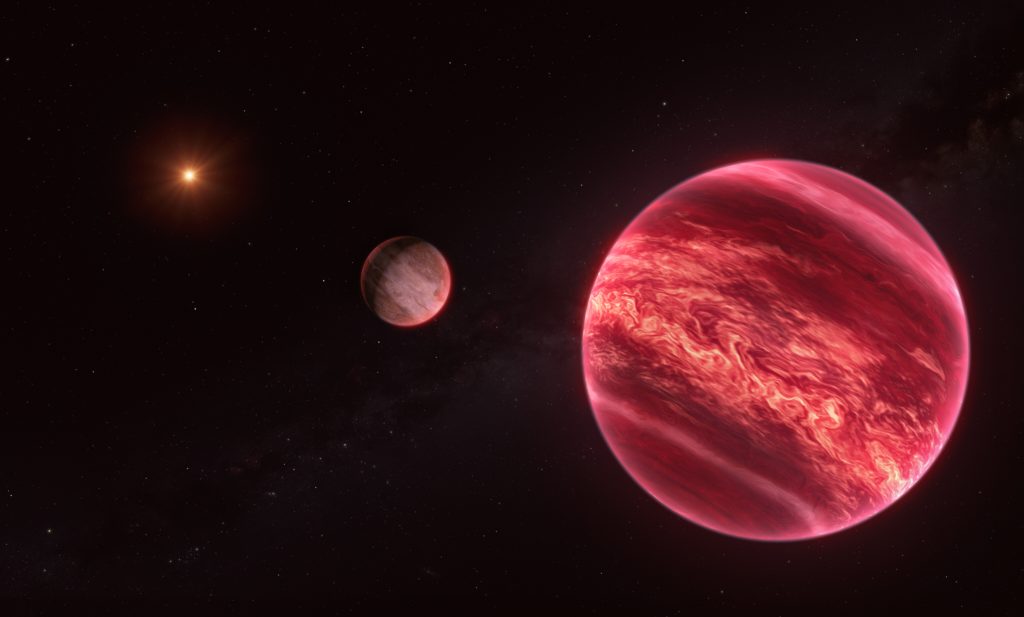
Published in The Astrophysical Journal Letters · 16 Sep 2026 An international team led by Andrea Bernardi, a YEMS PhD student at Universidad Diego Portales, has confirmed Elias 2-24 b, the youngest exoplanet detected to date. With a mass similar to Jupiter’s and an age of less than one million years, the planet remains embedded

Estudiante de doctorado YEMS UDP confirma Elias 2-24 b, el exoplaneta más joven detectado hasta ahora Leer más »

Nuevos datos observacionales para los proyectos del IEA

The research groups at UDP´s Instituto de Estudios Astrofísicos (IEA) will get new data to learn more from planetary systems to distant galaxies. Planetary Systems Prof. Lucas Cieza is a co-PI of one of the Large Programs recently approved by ALMA for Cycle-13. The project, called “PEBBLES” (Protosolar-system Environments with BroadBand Look at Evolution of

Nuevos datos observacionales para los proyectos del IEA Leer más »

Artist’s impression of CD-35 2722, a system with a moon-like object (Credit: ESO/M. Kornmesser)

La detección de una nueva 'exoluna' desafía las etiquetas cósmicas

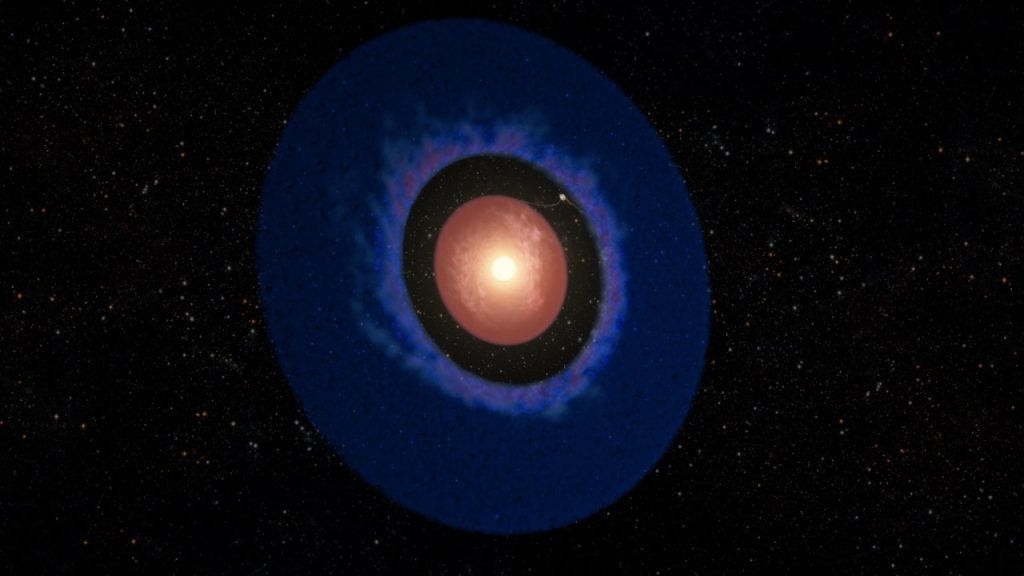
Observations made with the European Southern Observatory’s Very Large Telescope (ESO’s VLT) have revealed evidence for a moon-like object in the CD-35 2722 system. Unlike moons in our Solar System, the newly found object does not orbit a planet, raising questions about what to name it. Instead, it circles a brown dwarf, an object larger

La detección de una nueva 'exoluna' desafía las etiquetas cósmicas Leer más »

6 Años de Acreditación para el Programa de Doctorado en Astrofísica UDP.

El 11 de Marzo del 2026 nuestro querido programa de doctorado en astrofísica fue acreditado en su tercer período, esta vez por 6 años, duplicando el tiempo las acreditaciones anteriores.  La acreditación es un certificado que todo programa de educación superior debe obtener para existir formalmente. Con ese certificado pueden estudiantes, por ejemplo, ser eligibles

6 Años de Acreditación para el Programa de Doctorado en Astrofísica UDP. Leer más »

Taller Inclusivo Fases Lunares

¿Cómo explicar qué son y cómo se producen las Fases Lunares a alguien que no puede ver?. En la construcción del modelo táctil propuesto -usando la superficie interior de un paraguas burbuja- se busca conectar la experiencia aparentemente bidimensional de las fases lunares con la realidad tridimensional de los movimientos celestes, aclarando aspectos importantes sobre

Taller Inclusivo Fases Lunares Leer más »

DESBLOQUEANDO EL CRECIMIENTO GALÁCTICO: UNA HISTORIA DE DOS COMPONENTES - Tesis de Doctorado de Keerthana Jegatheesan

Have you ever found yourself wondering how galaxies — those cosmic whirlpools of stars, gas, and dust — form and grow over time? Then you’re in the right place, and your curiosity is well-founded. Galaxies come in a variety of shapes, with their own personalities, just as humans do, and astronomers have caught different processes

DESBLOQUEANDO EL CRECIMIENTO GALÁCTICO: UNA HISTORIA DE DOS COMPONENTES - Tesis de Doctorado de Keerthana Jegatheesan Leer más »